Understanding Potassium Peroxymonosulfate Uses Benefits and Safety Concerns
Potassium Peroxymonosulfate, often abbreviated as PMPS, is a versatile chemical compound that has gained significant attention for its various applications across numerous industries. Known primarily as a powerful oxidizing agent, PMPS is utilized in water treatment, disinfection, and even as a component in cleaning products. Its efficacy in breaking down organic contaminants and pathogens makes it a valuable tool for maintaining hygiene and sanitation in both domestic and industrial settings.
Beyond its functional uses, Potassium Peroxymonosulfate offers a range of benefits that contribute to its growing popularity. Its strong oxidative properties enable effective removal of stains and odors, while its stability makes it a safer alternative to other more hazardous chemicals. However, despite its advantages, there are essential safety considerations to be aware of when handling this compound. Understanding the appropriate usage of Potassium Peroxymonosulfate, along with its benefits and potential risks, is crucial for ensuring safe and effective applications. This article aims to provide a comprehensive overview of Potassium Peroxymonosulfate, highlighting its uses, benefits, and safety concerns to better inform users about this dynamic chemical.
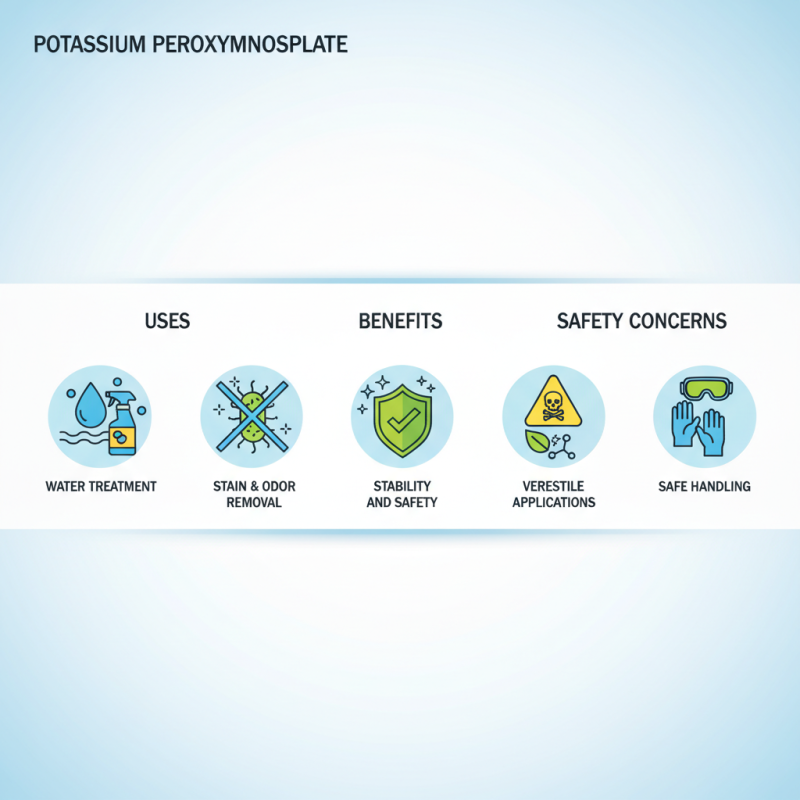
Understanding Potassium Peroxymonosulfate: An Overview
Potassium peroxymonosulfate (KHSO5) is a powerful oxidative compound often used for various applications ranging from disinfection to water treatment. Known for its stability and effectiveness, this compound releases active oxygen upon dissolution, which allows it to effectively target and eliminate microorganisms and organic contaminants. As a result, it has gained popularity as a safer alternative to traditional chlorine-based disinfectants, providing a versatile solution for environments requiring stringent hygiene standards.
The benefits of potassium peroxymonosulfate extend beyond disinfection. In addition to its antimicrobial properties, it acts as an oxidizing agent and can assist in the removal of organic residues in various industrial processes. It serves an important role in pool maintenance, where it helps to maintain water clarity and quality without the harsh side effects often associated with chlorine. However, while potassium peroxymonosulfate is regarded as safe for many uses, it is important to handle it with care. Users should be aware of potential skin and respiratory irritations upon exposure, which necessitates following proper safety protocols during application.
Chemical Composition and Properties of Potassium Peroxymonosulfate
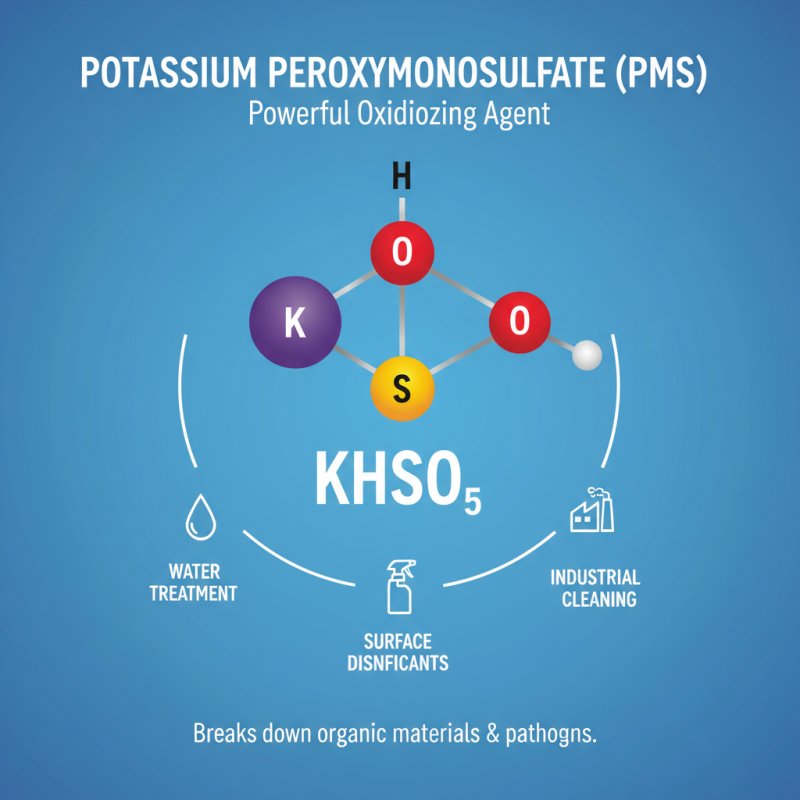
Potassium peroxymonosulfate (PMS), a powerful oxidizing agent, is often used in various applications due to its unique chemical composition. It consists of potassium, oxygen, and sulfur, providing a molecular structure that enhances its disinfecting properties. The chemical formula of potassium peroxymonosulfate is KHSO5, which reflects its composition of a peroxymonosulfate anion (HSO5^-) paired with potassium cations (K+). This structure allows PMS to effectively break down organic materials and pathogens, making it an essential component in water treatment, surface disinfectants, and even in various industrial cleaning applications.
One of the remarkable properties of potassium peroxymonosulfate is its stability under ambient conditions, which allows it to be stored and used effectively without rapid decomposition. According to a report by the Environmental Protection Agency, PMS has been shown to have a minimal toxicological profile in comparison to other oxidizers, making it safer for both users and the environment. Its efficacy against a wide spectrum of microorganisms, including bacteria, fungi, and viruses, has been well documented in scientific literature. For instance, research published in the Journal of Applied Microbiology indicates that PMS can eliminate 99.9% of certain pathogens in less than 10 minutes when used in appropriate concentrations. This efficiency underscores the potential of potassium peroxymonosulfate as a versatile and effective solution in hygiene and sanitation practices across multiple sectors.
Common Applications in Water Treatment and Disinfection
Potassium peroxymonosulfate (PMPS) has gained recognition in the water treatment and disinfection sector due to its powerful oxidative properties. Used primarily as a sanitizer and disinfectant, PMPS effectively eliminates microorganisms such as bacteria, viruses, and protozoa from water supplies. According to recent studies, the compound works by generating reactive oxygen species that disrupt microbial cell structures, thus ensuring safe and clean water. Its efficacy in a variety of pH conditions expands its applications in both municipal water treatment facilities and recreational water settings like swimming pools and spas.
In addition to its disinfectant capabilities, PMPS offers several advantages over traditional chlorine-based treatments. For instance, it does not produce harmful chlorinated byproducts, making it a safer option for both humans and aquatic life. Data from industry reports indicate that using PMPS in water systems can reduce total organic carbon (TOC) concentration, resulting in clearer water quality outcomes. Moreover, its versatility allows for use in shock treatments and routine maintenance, with performance metrics indicating significant reductions in microbial loads within minutes of application. This swift action offers pivotal benefits in situations requiring rapid disinfection, highlighting PMPS's role in modern water treatment strategies.
Benefits of Using Potassium Peroxymonosulfate in Various Industries
Potassium peroxymonosulfate (PMS) has gained significant attention across various industries due to its versatile applications and beneficial properties. As a powerful oxidizing agent, it is widely utilized in the water treatment sector for its ability to effectively remove impurities and disinfect water.
PMS is particularly effective against bacteria, viruses, and fungi, making it a popular choice for ensuring safe drinking water and maintaining hygiene in swimming pools. Its effectiveness at low concentrations, combined with its ability to break down contaminants without producing harmful by-products, underscores its value in promoting public health.
In addition to water treatment, potassium peroxymonosulfate is making strides in the field of agriculture. Its oxidative properties help in soil remediation by breaking down pollutants and enhancing soil quality. When used as a fertilizer additive, PMS can improve nutrient availability and promote healthy plant growth, ultimately leading to increased agricultural productivity.
The compound is also beneficial in the textile industry, where it aids in the bleaching and cleaning processes, providing a more environmentally friendly alternative to traditional chemical bleaches. These applications highlight PMS’s role in fostering sustainable practices across various sectors while effectively addressing industry-specific challenges.
Safety Concerns and Guidelines for Handling Potassium Peroxymonosulfate
When handling potassium peroxymonosulfate, it's essential to prioritize safety due to its strong oxidizing properties. This compound is widely recognized for its effectiveness as a disinfectant and oxidizer, but it can pose risks if not managed properly. Always wear appropriate personal protective equipment (PPE), such as gloves, goggles, and masks, to minimize exposure to skin and respiratory systems. Ensure that you work in a well-ventilated area, as inhalation of dust or vapors can lead to irritation or respiratory distress.
Tips for safe handling include keeping potassium peroxymonosulfate away from incompatible materials like organic substances, which may ignite upon contact. Store it in a cool, dry place, and keep the container tightly closed to limit moisture absorption. In case of a spill, handle it promptly and carefully, using absorbent materials to contain and clean up any leaks while wearing full protective gear. Always dispose of used materials in accordance with local regulations to prevent environmental harm. Proper education and adherence to safety guidelines are key to effectively utilizing this powerful chemical without compromising personal safety or public health.