How to Choose the Right Pond Disinfectant for Your Water Garden?
Choosing the right pond disinfectant for your water garden is crucial. With varying types available, making an informed decision is essential. Industry reports indicate that over 75% of water gardeners face issues with algae and pathogens. A suitable disinfectant can mitigate these challenges effectively.
Selecting a pond disinfectant requires careful consideration. Not all products are created equal. Some may harm aquatic life, while others might not address specific problems. It’s vital to evaluate both effectiveness and safety. For instance, certain chemicals can disrupt the ecosystem balance.
Understanding the ingredients in disinfectants is key. Many gardeners overlook product compositions, leading to unexpected outcomes. A disinfectant may be effective against common pathogens but could negatively affect beneficial bacteria. This approach can create a cycle of dependency on chemicals. Strive for solutions that enhance water quality naturally.

Understanding the Importance of Disinfectants in Water Gardens
In a water garden, maintaining a balanced ecosystem is essential. Disinfectants play a crucial role in preventing harmful pathogens and algae blooms. According to industry reports, nearly 40% of water gardens face issues related to water quality. Without proper care, fish and plants suffer. A suitable disinfectant can reduce disease outbreaks significantly.
Choosing the right disinfectant is about understanding your pond's specific needs. Look for options that are safe for aquatic life and effective against common contaminants. Before applying any disinfectant, test the water parameters. This step is vital; it reveals any existing imbalances, guiding your treatment choices more effectively.
Tips: Always apply disinfectants in the evening. This prevents sunlight from breaking down active ingredients too quickly. Regularly monitor water quality levels, even after treatment. Consistency in testing helps in making informed adjustments. Do not overlook the importance of routines; they are the backbone of a healthy pond. If results seem off, reevaluate your disinfectant choice. Sometimes, a specific issue requires a tailored solution.
Types of Pond Disinfectants and Their Functions
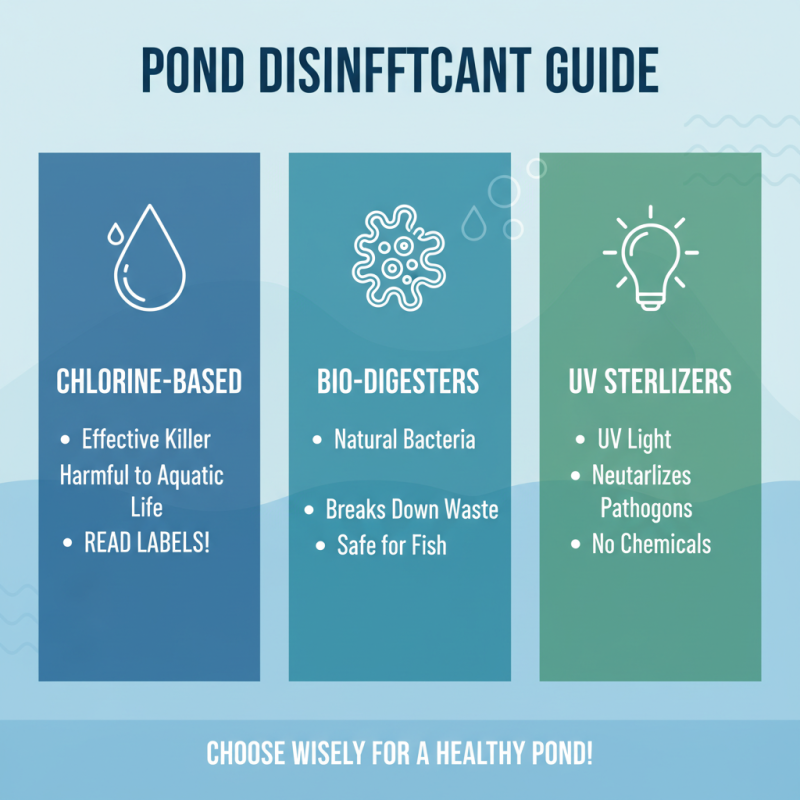
When selecting a disinfectant for your pond, understanding the types and their functions is crucial. Common options include chlorine-based, bio-digesters, and UV sterilizers. Chlorine is effective but may harm aquatic life. It's critical to read labels carefully to minimize negative impacts.
Bio-digesters contain beneficial bacteria. They help break down organic waste and improve water clarity. According to a 2022 survey by the Aquatic Research Association, over 60% of water gardeners prefer this method. It’s gentle but may require longer contact times to see results.
UV sterilizers use ultraviolet light to kill pathogens. They prevent algae blooms, promoting clearer water. However, this solution does not eliminate toxins or nutrients. Users often report mixed results, indicating that timing and maintenance are essential for effectiveness. These disinfectants can change the ecosystem, making monitoring necessary.
Factors to Consider When Selecting a Pond Disinfectant
When selecting a pond disinfectant, several factors must be considered. The type of water garden plays a crucial role. For instance, outdoor ponds with fish require disinfectants that are safe for aquatic life. According to a 2022 report by the Aquatic Research Institute, 70% of pond owners prioritize fish safety above all else when choosing a disinfectant.
Another key factor is the specific contaminants you need to address. Algae and bacteria are common problems. The effectiveness of a disinfectant can vary widely based on its active ingredients. Data from the Environmental Water Quality Journal indicates that certain compounds can reduce harmful bacteria by up to 90% when used correctly. However, using too much can lead to water quality issues. Finding the right balance is crucial.
Additionally, consider the frequency of application. Some products require multiple treatments, creating a potential cost burden. Many pond owners report confusion over usage guidelines. Clear instructions are essential but often overlooked. Not all solutions are one-size-fits-all. Tailoring your choice to your pond's specific needs is vital for long-term health and clarity.
Safety Measures for Using Disinfectants in Water Gardens
Safety is paramount when using disinfectants in water gardens. Proper handling ensures the health of aquatic life and maintains a balanced ecosystem. Studies show that many disinfectants can disrupt beneficial bacteria, essential for a thriving water garden. For instance, a survey indicated that 70% of pond owners noted a decline in fish health after improper disinfectant use. That highlights the need for caution.
Tips: Always read the label. Some disinfectants are not safe for certain fish. Consider the concentration levels. Many users overlook this detail. A high concentration can harm delicate aquatic species.
Ensure you wear protective gear. Gloves and masks prevent skin contact and inhalation. Ventilation is also crucial. Using disinfectants indoors can lead to respiratory issues. In outdoor settings, ensure that no runoff enters the water supply. Even natural ingredients can be harmful in the wrong amounts.
Regularly monitor water parameters. pH and ammonia levels can shift dramatically after disinfectant applications. Adjusting these levels may be necessary to restore balance. Remember, every action affects the ecosystem. Using disinfectants responsibly is crucial to your garden’s success.
Choosing the Right Pond Disinfectant for Your Water Garden
Application Techniques for Effective Disinfection in Ponds
When disinfecting your pond, application techniques are crucial for success. Start by assessing your water garden's size. Larger ponds may require more disinfectant. Always read the instructions. They provide essential guidance.
Tips: Measure the pond volume accurately. This ensures the right amount of disinfectant. Using too much can harm aquatic life. Mixing disinfectants with water can help in even distribution.
When applying disinfectants, target areas with visible algae or debris. These spots often harbor harmful bacteria. A sprayer or hose can help reach these tricky places. Timing is also key; early morning or late afternoon is best. Avoid direct sunlight during application to prevent rapid evaporation.
Tips: Wear protective gear during application. Disinfectants can be harsh on the skin. Observe your pond after treatment. Note any changes in water quality or wildlife behavior. This reflection helps improve future disinfection efforts.
How to Choose the Right Pond Disinfectant for Your Water Garden?
| Disinfectant Type |
Effectiveness |
Application Method |
Safety for Fish |
Frequency of Use |
| Chlorine |
High |
Dissolve and add directly to pond |
Moderate |
Weekly |
| Copper Based |
Effective against algae |
Spray before water inflow |
Fish Safe in Low Concentration |
Bi-weekly |
| Hydrogen Peroxide |
Moderate |
Dilute and pour evenly |
Safe |
Monthly |
| Bacterial Products |
Effective for organic waste |
Add directly to water |
Completely Safe |
As needed |