How to Choose the Best Chicken Disinfectant for Your Farm Care?
Choosing the right Chicken Disinfectant for your farm is crucial. According to Dr. Emily Carter, a leading expert in poultry biosecurity, “Proper sanitation begins with effective disinfectants.” Her insight underscores the importance of selecting a product that not only eliminates pathogens but is also safe for your chickens.
Farmers often face overwhelming choices in the Chicken Disinfectant market. With various brands and formulations, making the right decision can be challenging. The effectiveness of a disinfectant directly impacts chicken health and farm productivity. It's essential to consider factors like contact time, spectrum of activity, and safety.
Moreover, not all disinfectants are suitable for every farm layout or system. Farmers frequently overlook specific needs, such as residue after use or compatibility with cleaning protocols. Reflecting on these aspects can lead to better health outcomes for flocks. Ultimately, investing time in research can yield better protection against disease outbreaks, making your farm a safer place for your chickens.
Understanding the Importance of Disinfection in Poultry Farming
Disinfection plays a pivotal role in poultry farming. Effective disinfection helps reduce disease outbreaks, ensuring healthier flocks and better yields. Pathogens can thrive in a farm environment, posing risks to your birds’ health.
Regular cleaning and disinfecting of equipment and housing areas is essential. It creates a safe habitat for poultry, preventing the spread of illnesses.
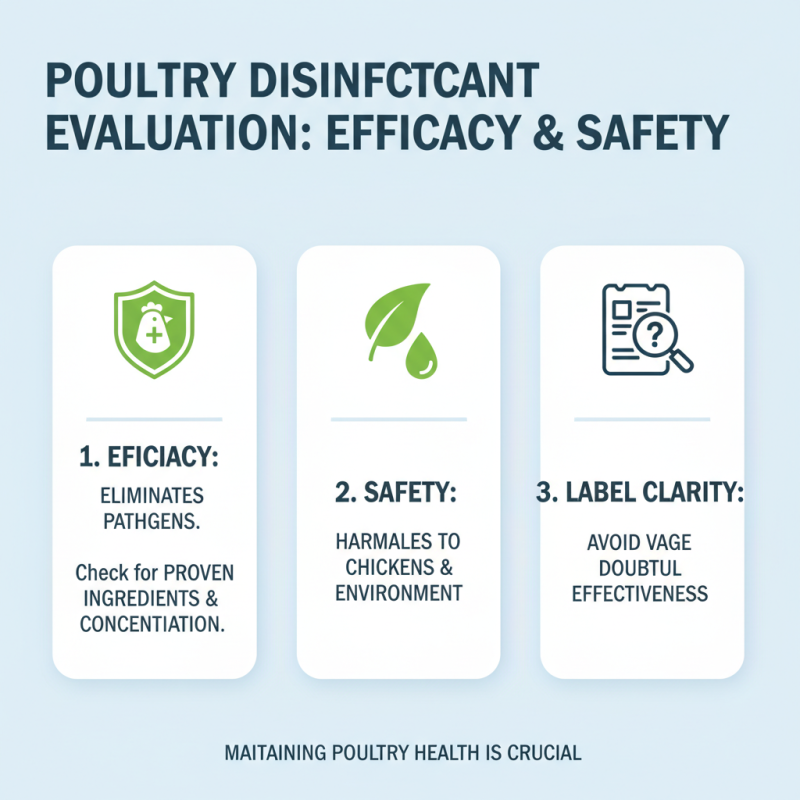
Tips for selecting a disinfectant: Look for products that are proven effective against common poultry pathogens. Check the manufacturer's guidelines for proper usage. An appropriate disinfectant should not only eliminate bacteria and viruses but also be safe for animals and humans.
Consider the environmental impact of your choices. Some disinfectants can harm beneficial microorganisms in the soil. They may also pose risks to water systems. Evaluate whether a product aligns with sustainable practices. Reflect on past experiences—what worked well, and what didn’t? This self-assessment can guide future disinfectant choices.
Key Factors to Consider When Choosing a Chicken Disinfectant
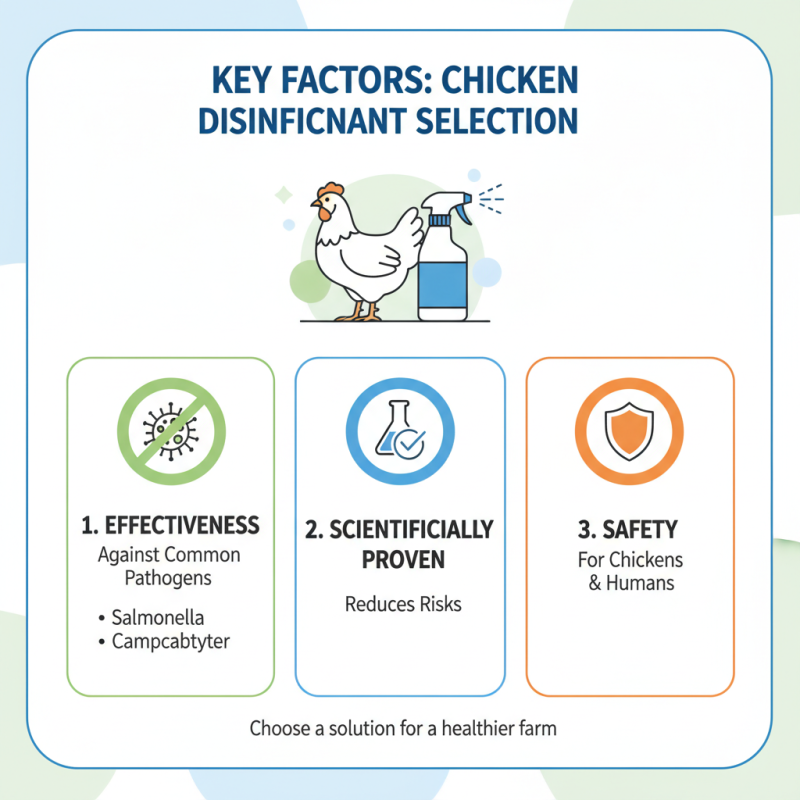
When selecting a chicken disinfectant for your farm, several key factors must be taken into account. The primary concern should be the effectiveness of the disinfectant against common pathogens. Research shows that some products can eliminate Salmonella and Campylobacter, two major concerns in poultry farming. You want a solution that is proven to reduce these risks effectively.
Another important factor is the safety of the disinfectant for both chickens and farm workers. Many disinfectants contain chemicals that can be harmful. Always check for non-toxic options that meet veterinary standards. It is essential to understand any potential risks associated with each product. Disinfectants that irritate skin or eyes should be avoided.
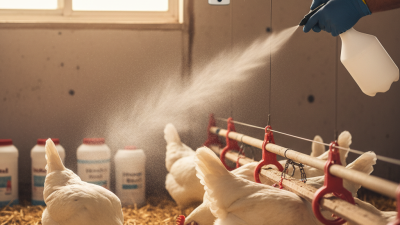
Tips for a good choice: ensure the disinfectant has a quick action time and is suitable for your farm's environment. Consider the application method, too; some disinfectants can be sprayed, while others may require soaking. Lastly, think about the cost and availability. It’s worth investing in a reliable product even if it seems more expensive initially. Reliable disinfectants can save money in the long run by preventing disease outbreaks on your farm.
Types of Disinfectants Suitable for Chicken Farms
Choosing the right disinfectant for chicken farms is crucial for maintaining flock health. Various types of disinfectants are available. Understanding their properties aids in effective management.
Broad-spectrum disinfectants, such as quaternary ammonium compounds, work well against bacteria and viruses. They are safe for both surface and animal use. According to a 2022 report from the Poultry Health Association, quats effectively reduce pathogens like Salmonella and E. coli by over 90%. Another category is chlorinated compounds. They are potent against a wide array of microorganisms. However, they may corrode equipment if not used properly.
Organic acids, like acetic acid, have gained attention recently. They are effective and environmentally friendly. Research indicates that organic acids can lower bacterial loads significantly. Still, application methods vary. Farmers should consider factors like dilution rates and contact time. Some disinfectants may require longer contact times to be effective. Finding the balance between effectiveness and safety is essential. Disinfectant selection is not a one-size-fits-all solution. Each farm's unique environment requires careful evaluation.
How to Choose the Best Chicken Disinfectant for Your Farm Care?
| Disinfectant Type |
Active Ingredients |
Application Method |
Effectiveness Against Pathogens |
Safety for Chickens |
| Quaternary Ammonium Compounds |
Benzalkonium chloride |
Spray or fogging |
Effective against bacteria and viruses |
Generally safe if used correctly |
| Hydrogen Peroxide |
3% to 10% solutions |
Surface cleaning and fogging |
Broad-spectrum effectiveness |
Safe with minimal residue |
| Iodine-based Disinfectants |
Iodophors |
Spray and soak |
Effective against bacteria, viruses, fungi |
Generally safe; may stain |
| Chlorine Compounds |
Sodium hypochlorite |
Diluted solution application |
Effective against a wide range of pathogens |
Use with caution; can irritate |
| Acid-based Disinfectants |
Phosphoric acid |
Surface cleaning |
Effective against biofilms |
Safe at proper concentrations |
Best Practices for Disinfecting Chicken Coops and Equipment
Maintaining a clean environment in chicken coops is
essential for the health of your flock. Regular disinfection prevents the spread of diseases.
Begin by removing all organic material, such as bedding and manure. This step ensures that
disinfectants work effectively and reach surfaces that need treatment.
Choose disinfectants that are effective against common poultry pathogens.
Follow the manufacturer's instructions for dilution and application. Consider using products that
don't harm the chickens. While bleach is effective,
it's harsh on surfaces. Alternatives like vinegar can be safer but may require more frequent
applications.
Don't overlook equipment when disinfecting. Feeders and waterers should also be thoroughly
cleaned. Wash them with warm, soapy water before disinfecting. Ensure they are completely dry
before reintroducing them to your coop. It's a simple process, but one that many neglect, leading
to potential health issues.
Regular monitoring of your disinfecting practices can help
identify areas for improvement. Keeping records of your disinfection schedules may also enhance
your farm's biosecurity efforts.